


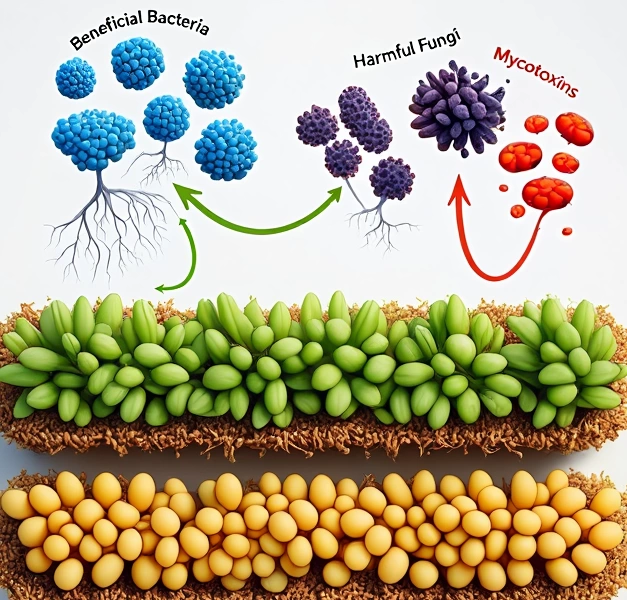
Reducing Mycotoxins in Animal Feed with EcoRic Biofungicide: An Integrated Biological Approach
Mycotoxins in feed are one of the most significant threats to livestock production in Africa and worldwide. Aflatoxin B1, fumonisins, zearalenone, and ochratoxin A can reduce animal productivity, impair immunity, cause reproductive problems, and lead to economic losses for farmers and feed producers. This problem is especially acute in regions with hot climates, unstable humidity, and long-term raw material storage, such as Kenya and East Africa.
Corn, soybeans, peanuts, sorghum, cottonseed meal, wheat, and silage crops often serve as a substrate for the development of toxin-producing fungi such as Aspergillus, Fusarium, and Penicillium. Therefore, an effective solution requires an integrated approach from the field to the feed mill. EcoRic, a biofungicide developed exclusively from the Bacillus subtilis BR strain, is becoming a key tool in reducing the risk of mycotoxins due to its ability to suppress pathogenic fungi during the forage crop growth stage, preventing their colonization and toxin formation.
Why do mycotoxins arise even before they reach the feed mill? Up to 70% of raw material contamination occurs in the field, not just during storage. Even modern cleaning and sorbents won't completely solve the problem if the original crop is contaminated.
The main causes of primary contamination of forage crops are:
-high humidity during grain filling;
-plant stress: heat, drought, nutrient deficiency;
-insect damage;
-use of contaminated seeds;
-unfavorable soil microflora.
It is at these stages that EcoRic is most effective.
How does EcoRic reduce the risk of mycotoxins in feed grain? EcoRic works on three key levels:
- suppression of mycotoxin-producing fungi: creation of a protective microbial film on leaves, roots, and cobs.
- strengthening crop immunity: healthy plants are less likely to crack, better tolerate drought, and recover more quickly from damage, reducing the entry point for pathogens.
- reduction of "starter" infections before drying and storage: the fewer fungal spores that enter the warehouse, the lower the risk of their growth, even under unfavorable storage conditions.
Application of EcoRic for corn:
- pre-planting seed treatment: soaking in EcoRic solution for 3-5 hours;
- 3-5 sprays with EcoRic solution during the growing season;
Result: reduction of aflatoxin and fumonisins by up to 60%.
Although EcoRic alone reduces fungal infection rates, an integrated approach is optimal on high-risk farms:
- EcoRic+ a chemical fungicide at early stages: the fungicide provides immediate pathogen suppression, while EcoRic provides long-term biological protection;
- EcoRic+ insecticides: the combination reduces the risk of cracks and punctures in ears;
Using EcoRic in field crops significantly improves raw material quality and increases feed safety.
Farmers and feed producers benefit from:
-higher grain sales
-reduced costs for feed sorbents
-increased animal productivity
-compliance with export standards
Mycotoxins are a complex problem requiring a systemic solution.
EcoRic biofungicide:
-reduces pathogen contamination of forage crops;
-reduces the risk of toxin formation in the field;
-improves raw material quality and feed safety;
- improves the economics of both farmers and feed mills;
- ensures an ecosystem-based, sustainable approach without increasing chemical treatments.
Using EcoRic is not just plant protection; it is an investment in animal and human health, safe feed, and a sustainable agribusiness.