


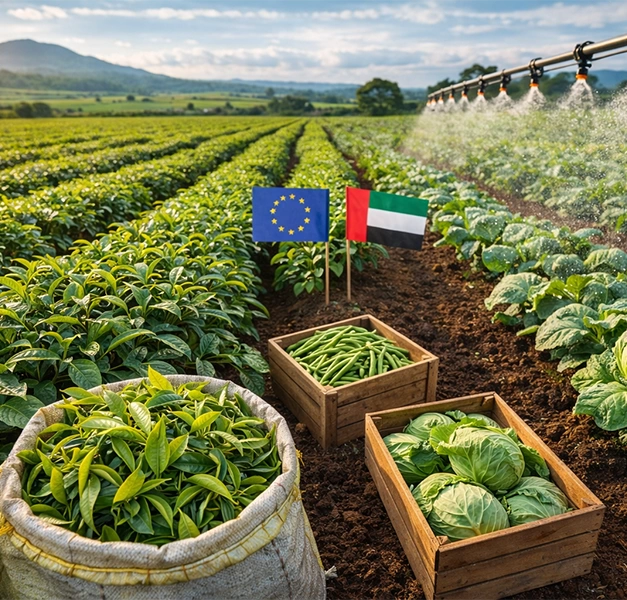
Kenya is a global leader in the export of black tea and fresh vegetables. However, international markets, particularly the European Union (EU) and the United Arab Emirates (UAE), are becoming increasingly strict regarding Maximum Residue Limits (MRLs) for chemical pesticides. For Kenyan exporters, the challenge is clear: how to protect crops from devastating diseases while ensuring the final product is "clean" and compliant.
The solution lies in the strategic integration of EcoRic, a high-concentration biological preparation based on Bacillus subtilis BR-1256. By moving away from heavy chemical reliance and adopting a "Soak & Spray" biological protocol, farmers can secure their export status and boost profitability.
- The Export Challenge: MRL Compliance
Exporting to the EU or UAE requires meeting rigorous safety standards. Excessive use of chemical fungicides and bactericides often leads to:
- Shipment Rejections: High chemical residues can result in the destruction of entire batches at the border.
- Banned Substances: Many traditional chemicals are being phased out globally due to environmental and health concerns.
- Loss of Reputation: Consistent compliance is the only way to maintain long-term contracts with international buyers.
- The EcoRic Strategy: "Shield & Spray" Methodology
To ensure maximum safety and zero residues, the EcoRic protocol focuses on targeted biological protection, avoiding wasteful soil drenching and focusing on the plant itself.
- For Export Vegetables (Potatoes, Beans, Cabbage)
- The Shield (Seedling/Tuber Soak): Before transplanting or planting, soak the seeds, seedling roots, or potato tubers in an EcoRic solution (1:100 dilution).
- Benefit: This creates a biological barrier that protects the plant from soil-borne pathogens like Ralstonia or Xanthomonas from the very first day.
- The Booster (Foliar Spraying): During the growth phase, apply EcoRic (1–2 L/ha) as a foliar spray every 10–14 days.
- Benefit: This triggers Induced Systemic Resistance (ISR), essentially "vaccinating" the plant against diseases without leaving toxic chemical residues on the harvestable parts.
- For Tea Production
- Canopy Management (Foliar Spraying): Since tea is harvested for its leaves, chemical residues are a critical risk. Regular foliar spraying with EcoRic (1.5–2 L/ha) protects against leaf rots and blights.
- Benefit: EcoRic is 100% organic and safe. It leaves no harmful traces, allowing for harvesting almost immediately after application, which significantly accelerates the production cycle.
- Economic Analysis: Cost Savings and ROI
Switching to EcoRic is not just about compliance; it is a smart financial move for large-scale exporters and cooperatives.
| Metric | Traditional Chemical Program | EcoRic "Shield & Spray" Program |
| Pesticide Costs (per Ha) | KSH 15,000 – 25,000 | KSH 6,000 – 9,000 |
| Fertilizer Efficiency (NRC) | Standard | 30–50% Reduction (EcoRic unlocks nutrients) |
| Export Rejection Risk | Moderate to High | Near Zero |
| Yield & Quality | Baseline | +20% Marketable Yield |
The ROI Factor:
- Direct Savings: By reducing expensive synthetic fungicides and mineral fertilizers (NRC) by up to 50%, a farm can save approximately KSH 15,000 – 20,000 per hectare.
- Profit Multiplier: Every 1 KSH invested in the EcoRic protocol returns 7 to 10 KSH in combined savings and protected export revenue.
- Conclusion: Securing the Future of Kenyan Exports
In the modern global market, "clean" is the new "quality." By utilizing EcoRic for seedling soaking and strategic foliar spraying, Kenyan farmers can meet the highest international standards of the EU and UAE. This approach restores the natural health of the plant, protects the soil's future productivity, and—most importantly—guarantees that Kenyan tea and vegetables remain the preferred choice for global consumers.