


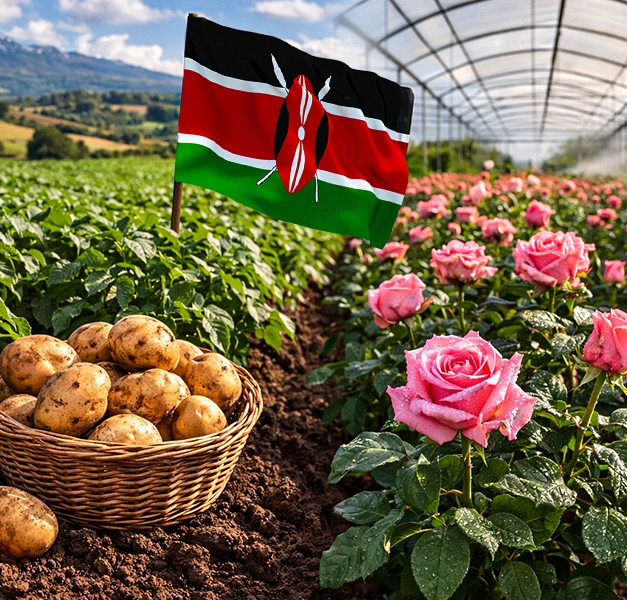
Kenya’s agricultural success is built on its diversity, from the high-altitude potato fields of Nyandarua to the intensive rose greenhouses of Naivasha. However, this diversity also brings a wide array of soil-borne and foliar diseases—specifically bacterial and fungal rots—that threaten the country's key export revenues.
The introduction of EcoRic, a microbiological breakthrough based on the highly concentrated strain Bacillus subtilis BR-1256, is changing the game. By focusing on a "Bio-Shield" strategy—seed/seedling priming and foliar fortification—farmers are achieving unprecedented protection without the need for soil drenching.
- The Versatility of Bacillus subtilis BR-1256
The BR-1256 strain is unique due to its high concentration (5–10 billion live cells per ml) and its ability to produce potent metabolites. It works through two main mechanisms:
- Direct Pathogen Suppression: It physically destroys the cell walls of harmful fungi and bacteria.
- Induced Systemic Resistance (ISR): It acts as a "vaccine," triggering the plant’s internal immune system to fight off viruses and rots from within.
- Implementation Strategy: The "Shield & Spray" Method
Unlike traditional biologicals that require heavy soil irrigation, the EcoRic protocol for Kenya focuses on high-efficiency contact points:
- For Potatoes (Export & Domestic)
- Tuber Priming: Before planting, seed tubers are sprayed or soaked in an EcoRic solution (1 L per ton). This creates a protective "bio-film" that prevents Bacterial Wilt (Ralstonia) and Soft Rot from entering the sprouting eyes.
- Foliar Fortification: Spraying at 2 L/ha during the 3-5 leaf stage ensures the plant stays resistant to Early Blight and stem rots during the humid growing season.
- For Roses (Global Export)
- Seedling/Cuttings Soak: Rose cuttings are dipped in a 1L EcoRic solution before transplanting. This colonizes the young plant, protecting it from Agrobacterium (Crown Gall) from the start.
- Canopy Protection: Regular spraying (2 L/ha every 7 days) prevents Downy Mildew and Botrytis, ensuring petal quality meets strict European and UAE standards.
- Economic Impact: A Comparison of Costs and ROI
The shift to an EcoRic-based program significantly improves the farm's bottom line by reducing chemical dependency.
| Metric | Traditional Chemical Program | EcoRic "Shield & Spray" Program |
| Bactericide/Fungicide Cost | High ($180 - $250/ha) | Low ($40 - $60/ha) |
| Fertilizer Efficiency (NRC) | Standard | 30–50% Reduction possible |
| Chemical Residue Risk | High (Potential Export Ban) | Zero (100% Organic & Safe) |
| Yield Increase | Baseline | +20% to +25% |
The ROI Calculation (The Kenyan Context):
- Cost of EcoRic Protection: Approx. KSH 4,000 – 8,000 per hectare (depending on the number of sprays).
- Profit from Yield Gain: Saving just 15% of a potato harvest or improving rose stem length by 5cm can add KSH 50,000 – 120,000 in additional revenue.
- Net Benefit: For every 1 KSH invested in the EcoRic protocol, farmers typically see a return of 5 to 10 KSH in combined savings and increased market value.
- Conclusion: A Sustainable Future for Kenya’s Exports
By utilizing the "Shield & Spray" method with EcoRic, Kenyan farmers are no longer dependent on expensive, failing chemicals or wasteful soil drenching. Whether it is preventing rot in a potato tuber or ensuring the perfect bloom of a rose, Bacillus subtilis BR-1256 provides a universal, cost-effective, and environmentally safe solution that secures Kenya’s place as a global agricultural leader.